
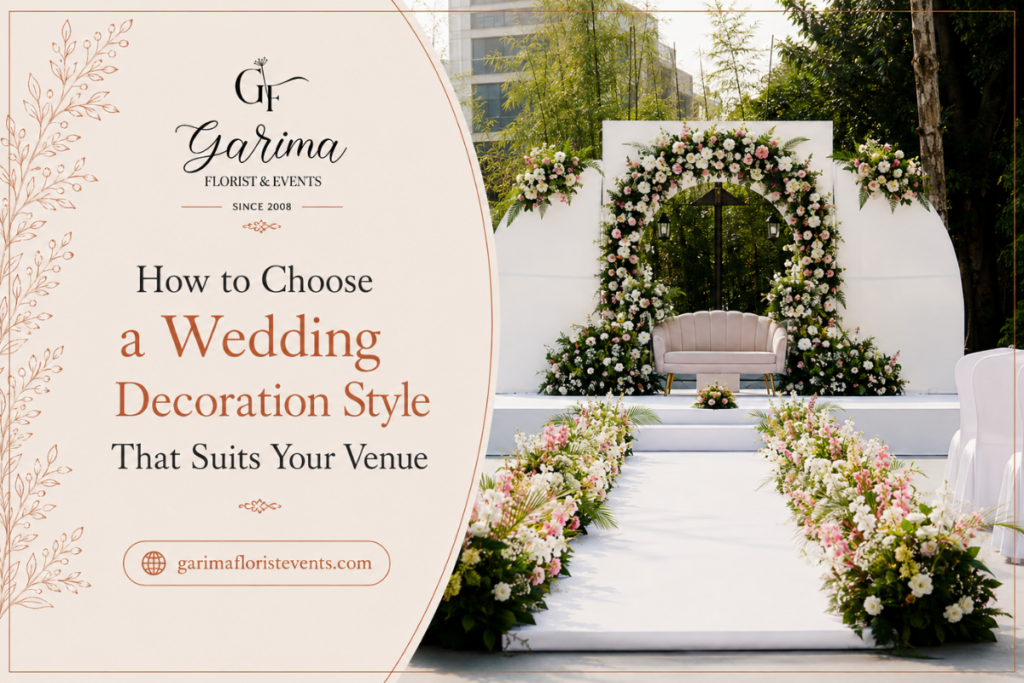
Most couples start planning their wedding decoration the same way. They open Pinterest or Instagram, save a few dream photos, and hope to recreate them on the big day. It feels exciting. However, it can also lead to disappointment. A decoration style that looks stunning in one wedding hall may not work at all in a different space with a different ceiling height, different colors, or different light.
Therefore, learning how to choose a wedding decoration style should always start with one place: your venue. For example, the venue’s architecture, size, layout, existing colors, lighting, and surroundings all shape how any decoration idea will actually look on the day. A style chosen without this in mind can feel out of place, no matter how beautiful it looked in a photo.
The best way to choose a wedding decoration style is to start with your venue’s architecture, size, layout, colors, lighting, and surroundings, then adapt a style that reflects your personal preferences.
This guide walks you through a simple way to choose your wedding decoration style -one that works with your venue instead of against it, while still feeling personal. Whether you’re planning your wedding in Kathmandu or elsewhere in Nepal, the same approach applies.
Quick Summary
The best wedding decoration style is one that fits your venue and your taste. Before you choose a style, look at the space, colors, size, lighting, and layout.
Use these simple steps:
- Check your venue.
- Look at its size and style.
- Pick a decoration style you like.
- Choose colors that fit the space.
- Think about lighting.
- Plan the main decoration areas.
- Set your budget.
- Decide if you need professional help.
Quick Guide: Match Your Decor to Your Venue
| Your Venue | Decoration Approach to Consider |
| Small venue | Keep the decor simple and light |
| Large venue | Use decor across key areas |
| Modern venue | Try clean and simple designs |
| Traditional-style venue | Try traditional-inspired decor |
| Garden or outdoor venue | Use natural colors and greenery |
| Hotel or banquet hall | Work with the existing colors and design |
| Venue with strong colors | Choose decor colors that work with them |
| Venue with low light | Plan extra lighting early |
The key idea: Start with your venue, then choose a style that fits the space and feels right for you.
Start With Your Venue Before Choosing a Wedding Decoration Style
Before you fall in love with a theme, take a proper look at your venue. This one step can help you avoid many decoration mistakes later on. Choosing a decoration style before understanding your venue is a bit like buying furniture before measuring the room. It might look nice on its own, but it may not fit the space you actually have.
Look at the Venue’s Existing Character
Every venue already has its own character, even before a single flower is placed. Take note of:
- The architecture -modern, classic, ornate, or simple?
- The existing wall colors and finishes
- The flooring, especially if a pattern or color will show through
- The ceiling height and any existing ceiling features
- Windows, natural light, and views
- Fixed decorative elements, like pillars, artwork, or chandeliers
- Natural surroundings, if the venue has gardens, a lawn, or a view
Good decoration works with these features, not against them. A venue with detailed interiors and warm-toned walls calls for a different approach than a plain, modern hall with neutral walls. Neither is better -they simply need different choices.
Consider the Size and Layout
The size of your venue changes how any decoration style should be applied.
In a smaller venue, decoration works best when planned with a light hand. Overfilling a small space can make it feel cramped rather than elegant. Pick one or two strong focal points, such as the stage or entrance, and keep the rest simple so guests can move around comfortably.
On the other hand,in a larger venue, the opposite problem can occur. If decoration sits in only one corner, the rest of the hall can feel empty. Larger spaces usually need decoration spread across several key areas, using a consistent look, so the whole venue feels connected rather than patchy.
In addition, layout matters just as much as size. Think about how guests will move through the space -from the entrance, to their seats, to the stage, and to the dining or photo areas. Decoration should guide this movement, not block it.
Match the Decoration Style to Your Venue
Once you understand your venue, you can narrow down which style will genuinely suit it. Here are several decoration approaches couples may consider, along with the kind of venue each can complement.
Modern Wedding Decoration
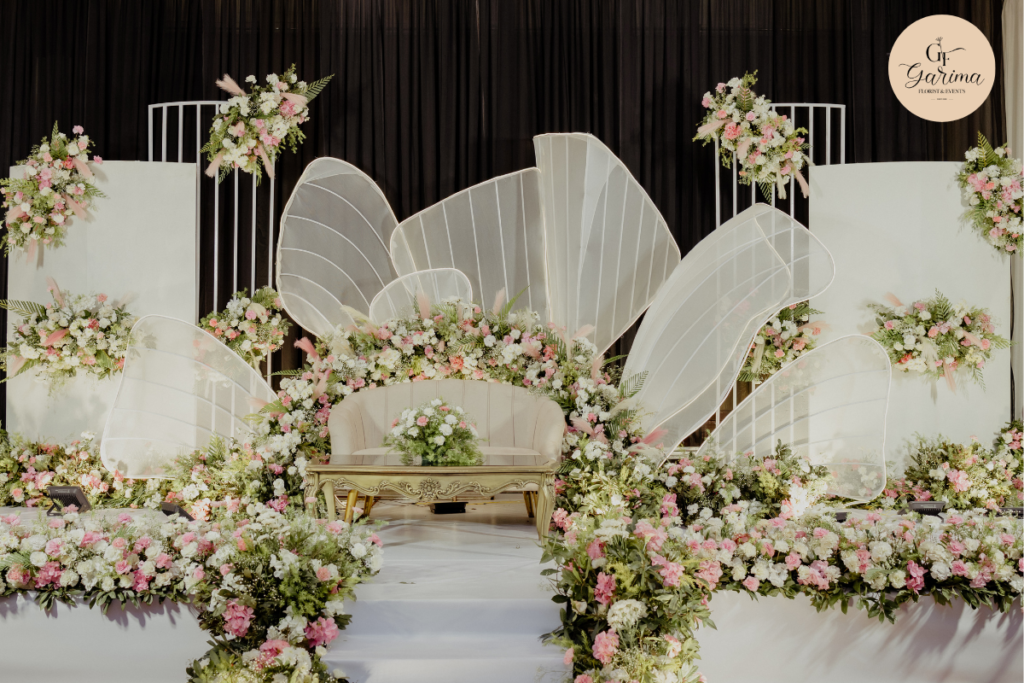
For instance, modern decoration favors clean lines, structured backdrops, and a controlled color palette. It often works well in venues with contemporary interiors and simple architecture, where the decoration itself becomes the main visual statement.
Minimalist Wedding Decoration
By comparison, minimalist decoration takes simplicity further. Instead of filling every corner, it focuses on a few carefully chosen elements -perhaps one striking backdrop or a simple floral arch -and leaves the rest of the space open. This can work well in smaller venues, or venues with strong architectural character that don’t need heavy decoration to look complete.
Traditional-Inspired Wedding Decoration
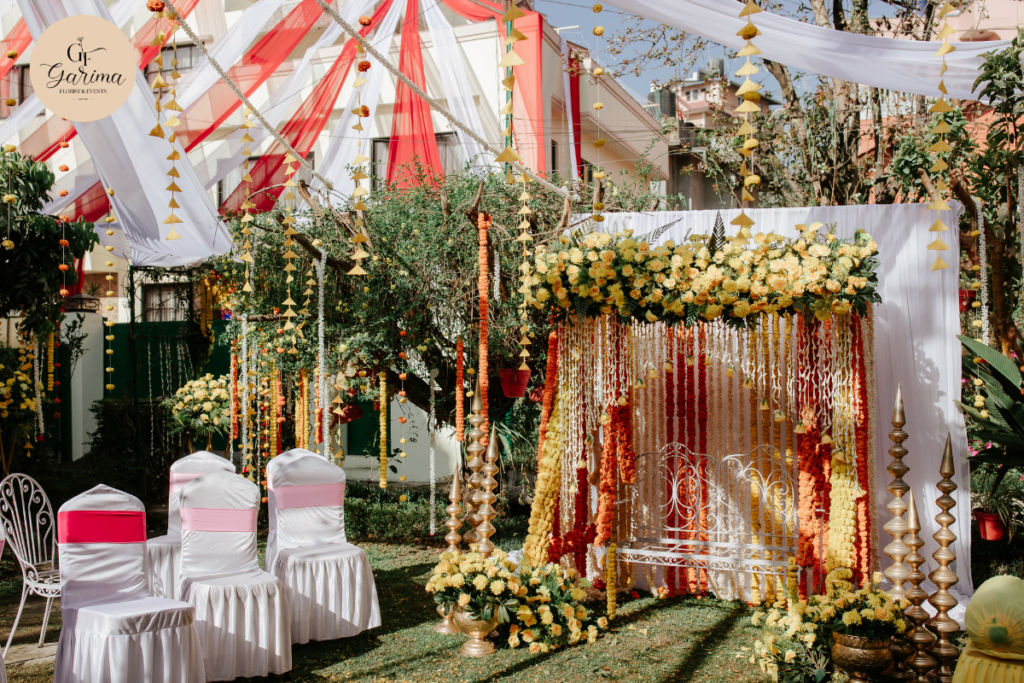
A traditional-inspired approach can incorporate elements that couples may associate with traditional wedding aesthetics, such as richer colors, layered fabrics, and detailed floral work. The specific elements should reflect the couple’s preferences and the requirements of their celebration. It can complement venues with warmer interiors or existing traditional touches. As with any style, the specific colors, flowers, and materials should reflect what the couple and their families prefer.
Floral Wedding Decoration
Floral decoration treats flowers as the main design element, used across the stage, mandap, entrance, and tables rather than as an accent. It can be styled modern, traditional, or somewhere in between, depending on the flower choices and arrangement. Venues with good natural light often let floral decoration stand out.
If floral styling is an important part of your wedding vision, explore our Floral & Decor services to see different decoration elements and styles that can be adapted to your celebration.
Natural or Rustic Decoration
This approach leans on greenery, natural textures, and organic materials rather than heavy ornamentation. It tends to suit outdoor or garden venues especially well, since it works with the surroundings instead of covering them up. Indoors, it can still be adapted, but usually needs some existing natural light or greenery to feel authentic.
Modern and Traditional Fusion
Many couples want a look that feels personal and modern while still honoring tradition. A fusion approach combines structured, modern elements -like a clean backdrop or contemporary lighting -with traditional touches, like specific colors or floral choices. This can work in almost any venue, as long as the two influences are balanced rather than competing.
None of these styles is automatically “the best.” The right one depends on your venue, your taste, and what feels right for your wedding.
Consider Indoor and Outdoor Venue Differences
Whether your wedding is indoors or outdoors changes several practical decoration decisions.
Indoor Wedding Decoration
Indoor venues -including hotels, banquet halls, and reception venues -give you more control over lighting and layout, since they aren’t affected by weather. Ceiling height and wall space matter here. A high ceiling can support taller installations, while a lower ceiling usually looks better with decoration kept closer to eye level. Existing interiors, such as wall colors or flooring, should guide your color and material choices.
Outdoor Wedding Decoration
Outdoor venues, such as gardens and resort lawns, bring natural surroundings into the plan. Greenery, open sky, and natural light can reduce the need for heavy decoration, but they also introduce weather, ground conditions, and changing light between daytime and evening. Lighting becomes especially important once the sun sets, since outdoor spaces lack the built-in lighting indoor venues have.
Wedding venues in Nepal can vary considerably in architecture, scale, and setting, from hotel ballrooms and reception venues in Kathmandu to resort and outdoor spaces elsewhere in the country.
If you’re comparing venues for your wedding, you can also explore the venues where Garima Florist & Events has worked to understand the range of spaces and settings the team has experience with.
For couples exploring Nepal as a wedding destination, the Nepal Tourism Board provides additional information about destinations and travel across the country. That variety makes it especially useful to assess the actual venue before settling on a decoration direction.
Resorts and garden venues often blend both worlds, offering indoor halls alongside outdoor lawns for different functions. It helps to plan how the style carries through both spaces so the look still feels connected.
Choose Your Wedding Colors and Lighting
You can choose wedding colors and lightning as per your requirement. Here’s how you do it:
Choose a Color Palette That Works With the Venue
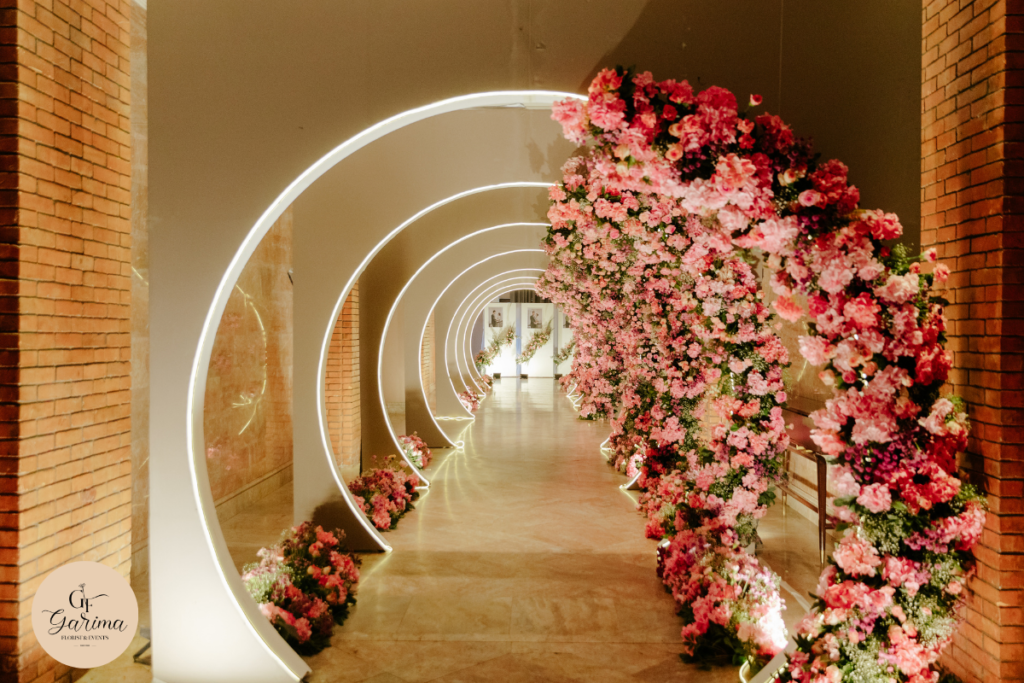
Your wedding colors should feel connected to the venue, not layered on top of it. Start by noting your venue’s existing colors -the walls, flooring, curtains, and furniture. If your venue has warm gold or maroon tones, a palette built around cool blues and grays may clash more than expected. This doesn’t mean you can’t use your favorite colors; it means choosing shades that sit comfortably alongside what’s already there.
It also helps to carry your chosen colors across every decoration area -entrance, stage, tables, and aisle -so the whole space feels like one cohesive design.
Plan the Lighting
Lighting changes how every other decoration choice appears on the day. The same floral arrangement can look different under warm evening light versus bright daylight. Before finalizing your style, think through:
- How much natural light your venue gets, and what time your ceremony or reception takes place
- Whether the venue’s existing lighting is warm or cool toned
- What additional stage or decorative lighting might be needed
- How the lighting will look in photographs, since many details are only fully seen through the camera
Lighting is often planned last, but it deserves attention early, since it can shift your entire color and material choices.
Plan the Main Wedding Decoration Areas
A wedding usually has several decoration areas that need to feel like part of one design, not separate, disconnected setups.
- Entrance – Often the first thing guests see, so it sets the tone for everything after.
- Mandap or ceremony area – Should be visible from most seats and proportioned to match the venue’s size.
- Stage and backdrop – Usually the main focal point and most photographed area, so it deserves extra attention to scale and lighting.
- Aisle – Should feel connected to the stage and entrance without blocking guest movement.
- Guest and dining area – Table decoration should echo the same colors and style, even in a simpler form.
- Photo booth or photo area – Works best when it reflects the main style, not standing apart.
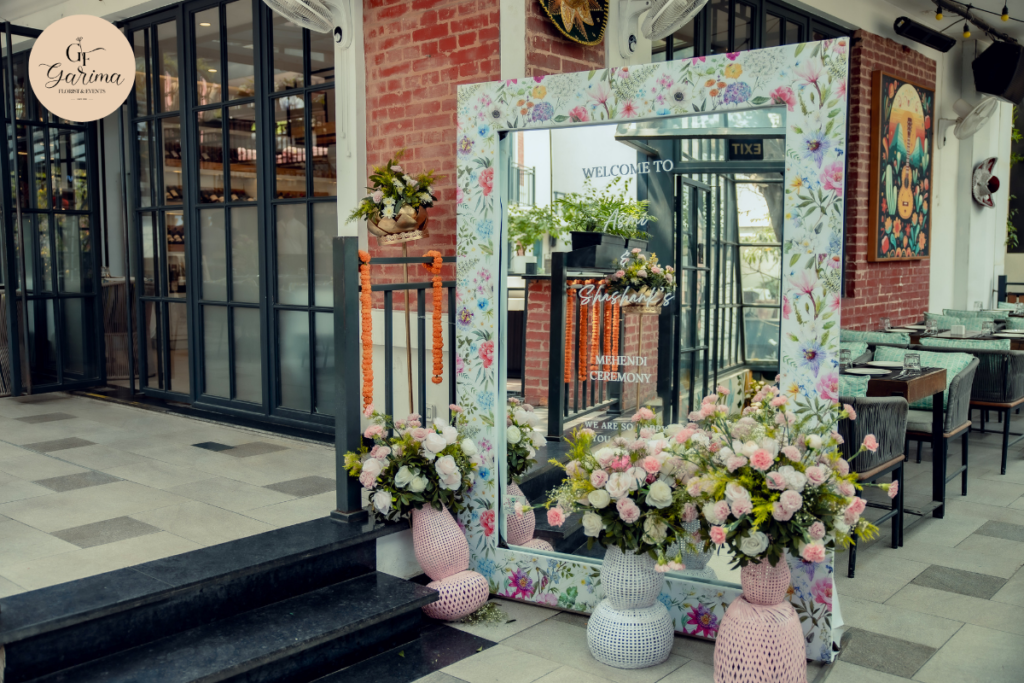
- Welcome signage – A small detail that still reinforces the overall look.
Not every area needs equal elaboration -they just need to belong to the same design. Every venue and wedding setup is different, so seeing real examples can help when developing your own ideas. Explore our wedding work to see examples of decoration and event setups by Garima Florist & Events.
Balance Your Personal Style With the Venue
Choosing a decoration style isn’t only about the venue -it’s also about you as a couple. The venue provides the framework, but your personal preferences should still shape the final look.
A helpful way to think about it: your personal style, plus your venue’s character, plus practical requirements, equals the decoration direction that will actually work. If you love a traditional Nepali wedding decoration style but your venue has a modern interior, you don’t need to abandon that preference -you can adapt it, perhaps by choosing traditional colors and floral elements within a more structured layout. The goal is a style that feels true to you while still fitting your space.
Consider Your Wedding Decoration Budget
Budget naturally shapes which decoration choices are realistic, so it’s worth thinking through early rather than after falling in love with an elaborate look.
- Set a rough budget before finalizing your style, so choices stay grounded.
- Prioritize areas guests will notice most -often the stage, entrance, and mandap.
- Consider your venue’s size, since larger spaces need more decoration to look complete.
- Compare inspiration photos with your actual venue and budget, rather than assuming an exact copy.
- Adjust smaller details first, before cutting what matters most to you.
This guide won’t give exact costs, since pricing depends heavily on your venue, scale, and choices. Actual pricing is best discussed with a decoration professional once you have a clearer style, venue, and scope.
DIY or Professional Wedding Decoration?
Here’s the difference between when you decorate wedding yourself and when you let professional do it:
When DIY Decoration Can Work
DIY decoration suits couples who enjoy hands-on planning and have a simpler setup to manage. It tends to work well when:
- The celebration is smaller or more intimate
- The decoration needs are simple, with just one or two areas to cover
- Family or friends are available and willing to help
- There’s enough time before the wedding to prepare everything
When Professional Help Can Be Useful
Professional support can make a real difference when a wedding involves more moving parts, such as:
- Multiple wedding functions to decorate for
- A large venue or a more complex layout
- Several decoration areas that need coordinating together
- Detailed setup work, like large installations or extensive floral arrangements
- A couple who’d simply prefer help managing the process
A Practical Middle Ground
You don’t have to choose only one approach. Many couples plan their overall style themselves, get professional advice on the details, and hire help for the more complex areas -like the stage or mandap -while managing simpler elements, such as signage, on their own.
Common Wedding Decoration Mistakes to Avoid
You can avoid following most common wedding decoration mistakes most people often make:
Choosing a style before considering the venue
This is an easy mistake to make, and it’s why this guide starts with the venue.
Copying an inspiration photo exactly
A saved photo shows one specific venue, scale, and lighting setup. Use it as a mood reference, then adapt the details to your own space.
Using too many competing colors
A wide, uncoordinated palette can feel chaotic. Fewer, well-chosen colors create a more cohesive look.
Overdecorating a small space
More decoration doesn’t always mean better decoration. In a smaller venue, restraint often looks more elegant than abundance.
Leaving a large venue visually disconnected
If decoration sits in only one corner, the rest of a large hall can feel empty. Spread your design language across the whole space.
Ignoring lighting
Decoration planned without considering lighting can look different than expected once the lights are on, especially in the evening.
Blocking guest movement
Decoration near the aisle, entrance, or walkways should never make it hard for guests to move through the venue.
A Simple Process for Choosing Your Wedding Decoration Style
Here’s a simple process for choosing your wedding decoration style explained below:
- Assess your venue. Study its architecture, size, layout, colors, and lighting.
- Identify your preferred style. Modern, minimalist, traditional-inspired, floral, natural, or fusion.
- Choose your colors. Build a palette that works with the venue’s existing tones.
- Consider lighting. Plan for natural light, evening light, and any added stage lighting.
- Select the main decoration areas. Prioritize entrance, mandap, stage, aisle, dining, and photo area.
- Check your budget. Set priorities before committing to an elaborate design.
- Consider DIY vs. professional support. Decide what you can manage and where you need help.
- Review the complete look. Check that every area feels connected, not just individually beautiful.
When Professional Wedding Planning and Decoration Can Help
Choosing a decoration style is just one part of planning a wedding. Once the style is chosen, it still needs to be coordinated with the venue, the schedule, the vendors, and often several wedding functions across a few days. For couples managing a larger venue, multiple functions, or several decoration areas at once, professional wedding decoration services and wedding planning services can make this coordination easier.
How Garima Florist & Events Can Help
Garima Florist & Events is a wedding planning, event management, and decoration company based in Budhanilkantha, Kathmandu, serving weddings and events in Kathmandu and across Nepal since 2008.
Wedding Planning
Garima Florist & Events provides wedding planning services for couples who want support coordinating their wedding arrangements.
Floral & Decor
Its Floral & Decor service covers the decoration side of the wedding, which can include developing a cohesive direction for areas such as the entrance, mandap, stage, and backdrop based on the venue and chosen style.
Wedding Functions
Garima also provides support for wedding functions, making this relevant for couples planning decoration across more than one part of their celebration.
If you’d like guidance specific to your venue, you’re welcome to reach out and discuss your wedding planning and decoration needs.
Wedding Decoration Style Checklist
- [ ] Venue assessed
- [ ] Venue size and layout considered
- [ ] Preferred style identified
- [ ] Colors considered
- [ ] Lighting considered
- [ ] Main decoration areas identified
- [ ] Budget considered
- [ ] Guest movement considered
- [ ] DIY or professional decision made
- [ ] Overall design reviewed for consistency
Frequently Asked Questions
How do I choose a wedding decoration style?
Start by assessing your venue’s architecture, size, layout, existing colors, lighting, and surroundings. Then choose a style that complements those features while still reflecting your personal preferences. Working this way, rather than picking a style first, is the most reliable path to a decoration plan that actually looks right on the day.
How do I match wedding decor to my venue?
Look at your venue’s existing colors, architecture, and lighting, and choose decoration elements that work with them rather than against them. Consider size and layout too, since a style that suits a small hall may need adjusting for a large one.
What should I consider before choosing wedding decoration?
Think through your venue’s character, size, and layout, your preferred colors, the lighting available, the key decoration areas you need to cover, your budget, and whether you’ll manage decoration yourselves or work with a professional.
What decoration style works for a small venue?
There’s no single style that works best for every small venue, but simpler, restrained approaches -like minimalist decoration with one or two strong focal points -often help a small space feel elegant rather than crowded.
How is indoor wedding decoration different from outdoor decoration?
Indoor decoration offers more control over lighting and isn’t affected by weather, but is shaped by ceiling height, wall space, and existing interiors. Outdoor decoration works with natural surroundings and daylight, but needs planning for weather, ground conditions, and evening lighting.
Can traditional and modern wedding decoration be combined?
Yes. A fusion approach can combine structured, modern elements with traditional colors, fabrics, or floral choices, as long as the two influences are balanced rather than competing for attention.
Should I do my wedding decoration myself or hire a professional?
This depends on the size and complexity of your wedding. DIY decoration can work well for smaller celebrations with simpler requirements, while professional support tends to be more useful for larger venues, multiple functions, or several areas that need coordinating.
Should I choose my wedding decoration style before booking a venue?
It’s generally better to book your venue, or at least shortlist a few options, before finalizing your decoration style. Since the venue’s architecture, size, and colors directly influence which approach will work best, choosing the style too early can lead to a mismatch.
When can professional help with wedding decoration be useful?
Professional help is often useful when a wedding includes multiple functions, a larger or more complex venue, several decoration areas to coordinate, or when a couple simply prefers support managing the process.
Conclusion
Choosing the right wedding decoration style starts with your venue. Look at the space, size, layout, colors, lighting, and overall feel before choosing your decor. Then, add your own style to create a wedding space that feels beautiful and personal.
If you are unsure which decoration style will work best for your venue, Garima Florist & Events can help you plan your wedding decoration and other wedding arrangements.
Get In Touch
Phone: 9851345602
Email: garimaflorist@gmail.com
Location: Budhanilkantha, Kathmandu, Nepal
Ready to plan your wedding decoration? Book a Consultation with Garima Florist & Events to discuss your wedding plans and decoration needs.