

Mehendi decoration ideas for weddings in Nepal should start with comfortable seating, a clear workspace for artists and room for guests to move. Then choose a backdrop, flowers and colors that fit the space.
Whether you are planning at home, in a venue or outdoors, allow for longer sitting times, guest waiting areas and useful lighting. This guide explains how to combine those practical needs with decoration, so the setup works for the function as well as the photographs.
Quick Summary: Planning a Mehendi Setup
- Choose the layout before you choose the backdrop.
- Plan the bride or couple seating early.
- Leave enough working room for the Mehendi artists.
- Keep guest seating comfortable for long sitting.
- Use one clear colour palette.
- Keep the photo area away from busy movement.
- Plan lighting for both Mehendi application and photos.
- Prepare shade and a weather backup for outdoor setups.
Mehendi Setup at a Glance
| Factor | Home Setup | Venue Setup | Outdoor Setup |
| Space | Measure the usable area and keep paths clear | Create separate zones where space allows | Define seating and paths within the available area |
| Seating | Compact sofa, bench or floor cushions | Lounge zones with mixed seating | Shaded seating on stable ground |
| Artist workspace | One compact work area | A separate artist zone | A shaded area with a level surface |
| Backdrop | Simple fabric or floral frame | Larger floral or draped backdrop | Greenery or garden-style backdrop |
| Lighting | Daylight or room lighting, supplemented where needed | Working light for artists plus decorative lighting | Shade and daylight, with working light for evening |
| Guest flow | One clear walkway | Separate waiting and photo areas | Clear paths that avoid mud or slopes |
| Weather considerations | Check weather exposure for terraces and courtyards | Confirm whether the booked area is indoor, outdoor or covered | Plan for shade, wind, rain and a covered alternative |
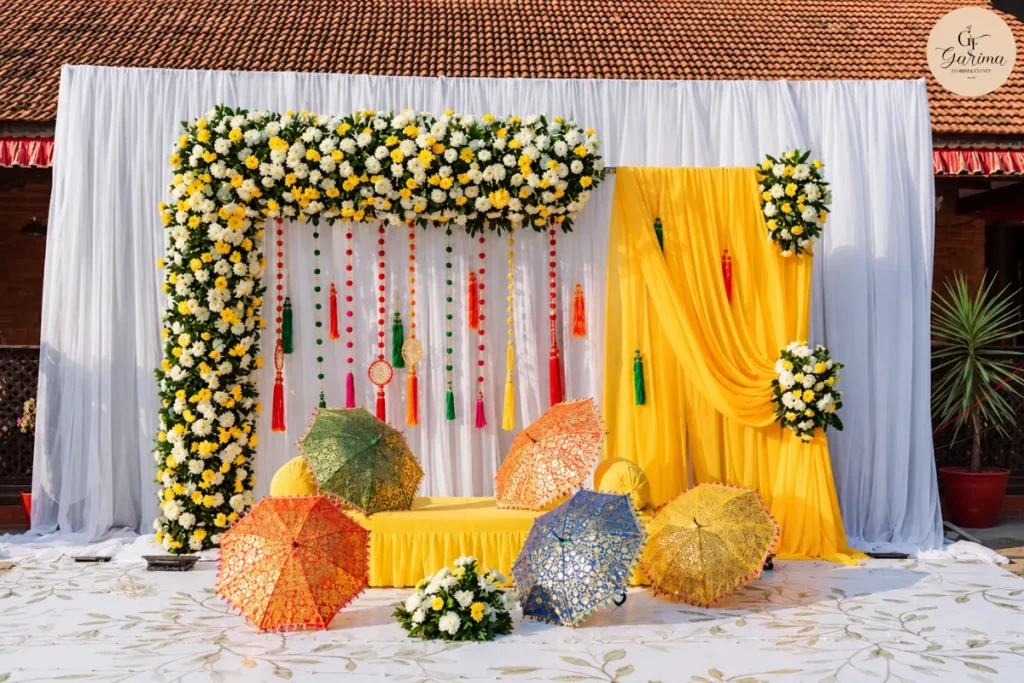
Start With the Layout: Home, Venue or Outdoor Mehendi?
Layout should come before decoration because it affects seating, artist workspace, backdrop size, guest movement and photo areas. First, decide where the Mehendi will happen. Next, mark where people will sit and walk. Finally, add the decoration around that plan. Furthermore, for a wider view of setup planning, read our guide to event decoration in Nepal.
Mehendi Decoration at Home
Mehendi decoration at home works well when you keep the plan simple. A compact layout, one focal point and a clear walkway matter more than many props.
- Pick one wall for the backdrop.
- Place a sofa, bench or cushions in front of it for the bride or couple.
- Leave space for the artist to sit close to the bride.
- Keep a clear path for guests and family.
- If space is tight, use the same corner for Mehendi and photos.
Mehendi Decoration at a Venue
If your venue has enough usable space, separate the bride or couple seating, artist workstations, guest seating and photo area.
However, venues also bring rules. Check access points, setup timing and where food and service staff will walk. Then keep those paths away from the Mehendi area, so staff never need to cross the artists’ space.
Outdoor Mehendi Setup
Outdoor Mehendi works well when you plan shade, seating, artist workspace and a weather backup before adding decor. Because guests may sit for longer periods, comfort and stable ground matter as much as the backdrop.
Simple Mehendi Decoration Ideas for Home and Small Spaces
A small home does not need to copy a large stage setup. Instead, choose a few strong elements and give them room. These simple mehendi decoration ideas work well in small spaces:
- Fabric backdrop: Hang a bright or soft cloth behind the seating.
- Marigold strings: Add them to the sides or the top for colour.
- Compact floral frame: Use a small frame instead of a full stage.
- Simple sofa or bench: Choose seating the bride can sit on comfortably.
- Floor cushions: Add them for guests who want to sit low.
- One combined Mehendi and photo area: Use one corner for both.
- Limited props: Add only what you need.
- Clear floor space: Keep room for walking and for the artist.
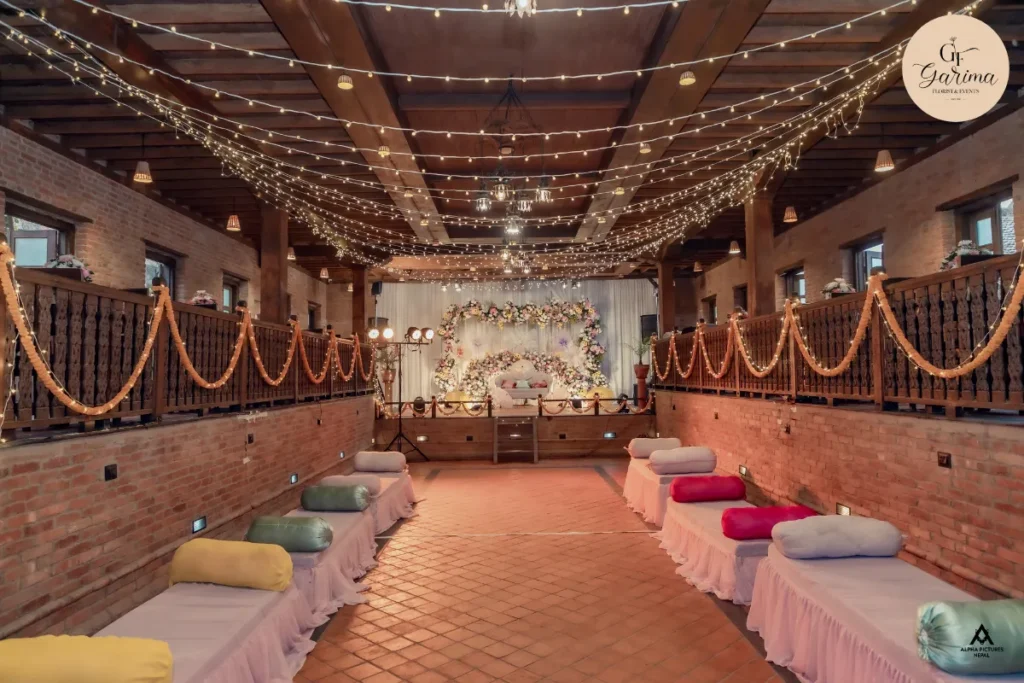
Plan the Seating Before the Decoration
Choose and position the seating before sizing the backdrop. The person receiving Mehendi needs support, while the artist needs a comfortable working position and clear access to the hands or feet.
Bride or Couple Seating
The bride may sit for a long time, so choose seating that supports her.
- Comfort and posture: Pick a seat with a good back and a steady base.
- Arm support: Add a cushion or small table so her hands rest easily.
- Visibility: Make sure guests can see her without crowding.
- Photo angle: Place the seat so photos look good from the front.
- Artist access: Leave space so the artist can sit close and move freely.
Guest Seating
Guests also wait, chat and sometimes get Mehendi too. Therefore, give them a waiting area and small seating groups. Lounge-style seating helps people relax and talk. Meanwhile, spacing between groups stops the area from feeling crowded.
Mixed Seating Heights
Mixed heights make a Mehendi lounge feel relaxed and practical. They also suit different guests. You can combine:
- Sofas and benches
- Floor cushions
- A divan or takhat
- A jhoola or swing
- Supportive chairs
Offer supportive chairs alongside low seating so guests can choose what suits their comfort and mobility. Keep some seats easy to reach without steps or floor-level sitting. In addition, a jhoola can become a lovely feature, but check that it is safe and easy to sit on.
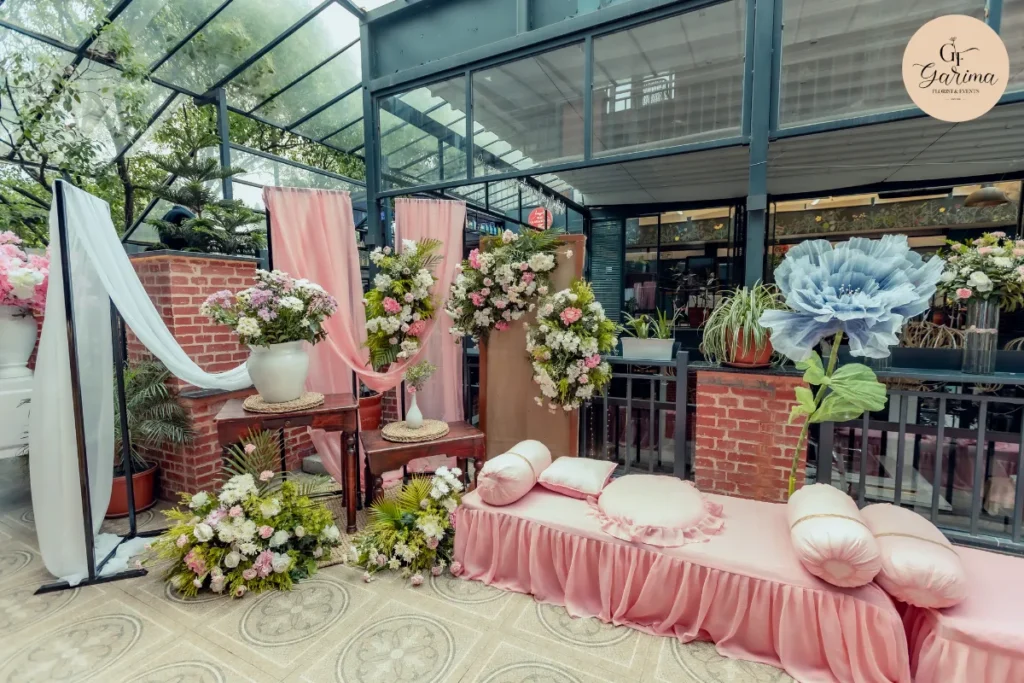
In Garima’s Mehendi setups, seating is usually planned around comfort, artist access and the amount of time guests are expected to stay. Sofas, benches, floor cushions and mixed-height seating can all work depending on the venue and guest profile.
Leave Enough Working Space for Mehendi Artists
Plan the artist workspace before you add decorative props. Artists need room to sit, reach and work without being bumped.
- Artist position: The artist should sit close to the client with room to move.
- Client position: The client needs a comfortable seat and a way to support their arms or legs as needed.
- Side table: Give the artist a place for cones and supplies.
- Lighting: Make sure the artist can see the hand clearly.
- Waiting space: Give guests a place to sit while they wait for their turn.
- Clear walkway: Keep paths open so nobody walks through the work area.
- No crowding: Ask guests to stand back, so the artist can work calmly.
- Hands and feet: If foot Mehendi is planned, check leg support and artist access too. Test the seating arrangement with the artist before finalizing the layout.
For this reason, an artist zone often matters more than one more floral piece.
Mehendi Backdrop Ideas for Different Spaces
A backdrop should suit your space, not just look pretty. Use the details below to decide.
Floral Backdrop
Best for: Venues and larger homes where flowers can be the main feature.
Space needed: Medium to large.
Practical consideration: Floral work needs setup time, so confirm access early.
Fabric and Draped Backdrop
Best for: Homes, halls and indoor setups, where fabric can provide colour without dense floral coverage.
Space needed: Small to medium.
Practical consideration: Drapes need a firm hanging point, so check the wall or frame first.
Marigold Backdrop
Best for: Warm, traditional looks and colorful Nepali wedding settings.
Space needed: Small to large, depending on the design.
Practical consideration: Check the combined weight of garlands and the supporting frame before installation.
Greenery and Garden Backdrop
Best for: Gardens, terraces and open areas.
Space needed: Medium to large.
Practical consideration: Check wind and ground stability so the structure stays steady.
Minimal Home Mehendi Backdrop
Best for: Small rooms and compact home ceremonies.
Space needed: Small.
Practical consideration: Keep it light and place it against a clear wall.
Swing or Lounge Backdrop
Best for: Relaxed, photo-friendly Mehendi functions.
Space needed: Medium to large.
Practical consideration: Use a properly installed swing suited to its intended users. For Mehendi application, keep the seat still and check the artist’s working position; a fixed chair or bench may be more practical during application.
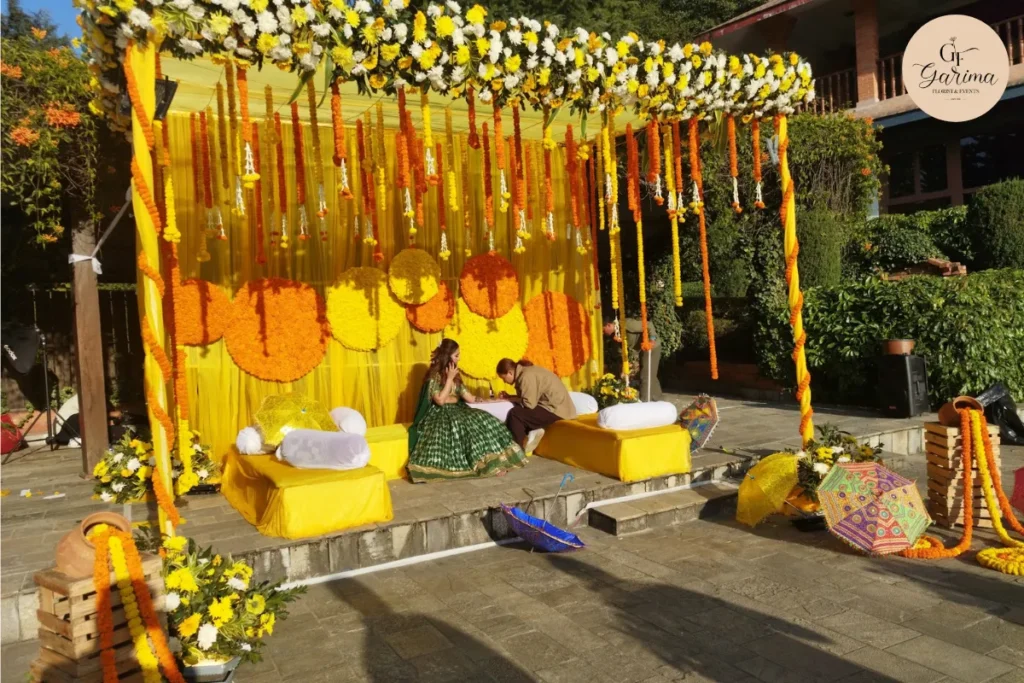
Colour Combinations and Styling Ideas for Mehendi
Choose a palette that suits the venue, flowers and fabrics. Green and yellow, pink and orange, jewel tones and softer pastels can all work. Additionally, use a few repeated colors across the setup to connect the seating, backdrop and floral details.
Green and Yellow
This pair feels fresh and traditional. It works well with marigolds and greenery. Avoid adding too many extra colors on top.
Pink and Orange
This combination feels bright and lively. It suits daytime functions and fabric decor. Keep the shades close, so the space does not look noisy.
Green, White and Gold
This palette feels calm and tidy. It works well in venues and evening setups. However, use gold in small amounts so it stays an accent.
Jewel Tones
Deep greens, blues and magenta give a rich look. They suit indoor spaces and evening light. Avoid mixing too many deep shades in one corner.
Earthy or Bohemian Palette
Soft browns, rust and cream feel relaxed. They suit gardens and floor seating. Keep props simple, so the look stays natural.
Soft Pastels
Pastels feel light and gentle. They work well in daylight and small homes. Add some contrast with greenery, because pale colors can look flat in photos.
Flowers That Work Well for Mehendi Decoration
Flower choice should depend on the space, palette, season and how heavily the design uses floral. For a broader look at how flowers, backdrops and styling work together, see Garima’s floral and decor design page.
Marigolds
Marigolds add warm yellow and orange tones.Use them in:
- Garlands
- Hanging details
- Backdrop accents
- Entrance decor
Roses and Carnations
Roses and carnations add softer colour and shape. Many couples use them for floral frames, table decor and seating accents. Availability changes with the season, so confirm early.
Mixed Flowers and Greenery
Mixed flowers give a softer look. Greenery adds contrast and helps colors stand out. It also suits outdoor spaces and reduces a heavy, crowded feeling.
Fresh vs Artificial Flowers
Both options can work. Compare them in these areas:
- Appearance: Fresh flowers provide natural texture, while artificial flowers vary in realism and finish. Check samples under the planned lighting before choosing.
- Flexibility: Artificial flowers allow early setup and reuse.
- Durability: Artificial flowers can be more practical for long installations or areas exposed to heat, while fresh flowers need more attention to timing and conditions.
- Availability: Fresh flowers depend on the season and supply.
- Installation conditions: Check the weather and setup time before you choose.
Garima Florist & Events commonly works with marigolds, roses and carnations, depending on the colour palette and seasonal availability. Artificial flowers may also be used when the setup needs longer-lasting coverage.
Create a Comfortable Mehendi Lounge Area
A relaxed lounge gives guests a place to sit, wait and talk. These mehendi seating ideas help you build one:
- Rugs: Define the lounge and soften the floor.
- Floor cushions: Add low, casual seating.
- Sofas and benches: Give comfortable options for longer sitting.
- Low tables and side tables: Offer a place for glasses, cones or phones.
- Shaded seating: Protect guests from sun in open areas.
- Mixed heights: Let every age group sit comfortably.
- Spacing between groups: Leave room to walk between seats.
Good mehendi seating decor looks inviting, but it must also feel easy to use.
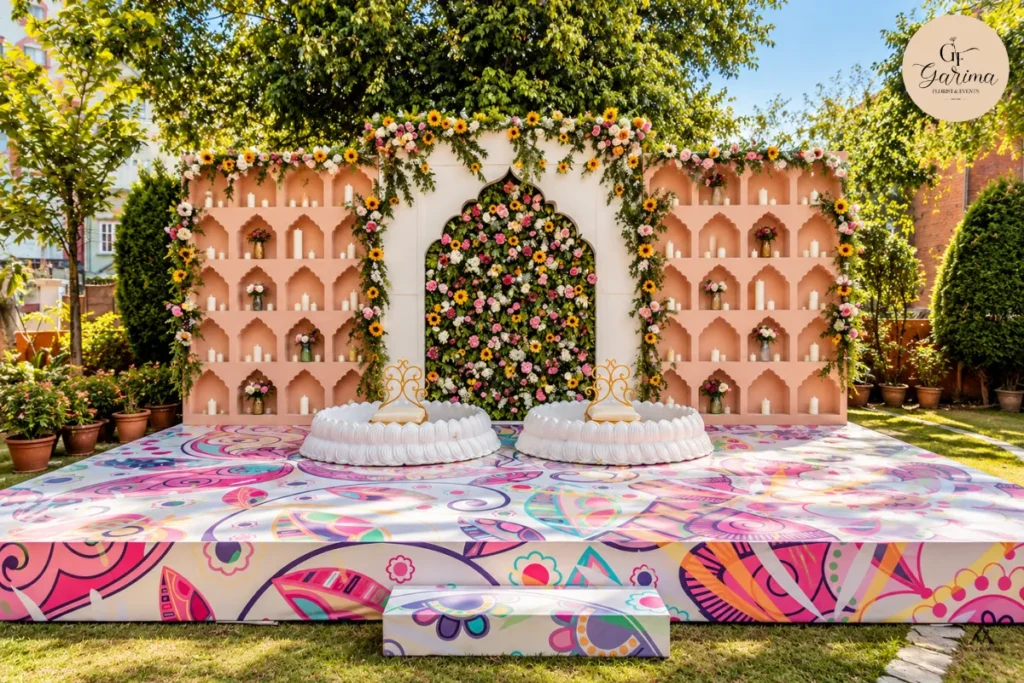
Plan the Photo Area Without Blocking the Function
The photo area should never become a traffic jam. Place it where people can stop for photos without crossing the artist workspace or the food and service paths.
- Backdrop position: Face it away from busy walkways.
- Guest photos: Leave standing room in front of the backdrop.
- Bride or couple photos: Choose an angle with good light.
- Artist workspace: Keep photographers and guests out of the artist’s way.
- Shared backdrop: In a small space, use the main backdrop for photos before application or during planned breaks. Keep guest photo queues away from the artist while work is underway.
In short, the best photo location is one that does not slow anyone down.
Think About Lighting for Mehendi Application and Photos
Decorative lighting alone is not enough, because Mehendi artists also need clear working light. Therefore, plan both types of light together.
- Natural daylight: Place the artist near a window or open space when possible.
- Task lighting: Add a soft, steady light close to the work area.
- Evening setup: Test the light after sunset.
- Face and hand visibility: Make sure people can see both clearly.
- Harsh shadows: Avoid strong lights that cast shadows on the hands.
- Photo lighting: Keep the backdrop lit evenly.
- Power access: Check where plugs and extension cords can run safely.
Outdoor Mehendi Decoration: Shade, Weather and Comfort
Outdoor mehendi decoration needs the most practical thinking. Because guests may sit for a long time, comfort must come first.
- Shade and sun exposure: Use a canopy or place seating under trees or covered areas.
- Artist and guest comfort: Keep both groups out of harsh sun.
- Wind: Secure drapes, flowers and lightweight decor.
- Rain: Keep a covered backup area ready.
- Ground stability: Choose a level, firm surface. Do not use rugs to hide uneven ground; secure rug edges and arrange suitable flooring where needed.
- Evening temperature: Add blankets or a warm indoor space if needed.
For garden mehendi decor, choose a simple layout, and test it at the same time of day as your function.
Practical Details People Often Forget
Small details can make a big difference on the day. Check these early:
- Waiting area: Give guests a place to sit while they wait.
- Hand-drying space: Provide somewhere guests can remain comfortably while following their artist’s aftercare instructions.
- Side tables: Add them near the artist and the lounge.
- Food and drink placement: Use separate tables so refreshments do not compete with artist supplies or create spill risks.
- Washroom access: Make sure the route is easy and clear.
- Artist supplies: Give artists a safe place to keep their items.
- Power: Plan outlets for lights and fans.
- Queue flow: Keep a simple order for guests waiting their turn.
- Personal items: Provide a spot for handbags and phones.
- Clean-up: Keep tissues and suitable cleaning materials for spills nearby, separate from the artist’s products.
Simple vs More Detailed Mehendi Setups
| Element | Simple Mehendi Setup | More Detailed Setup |
| Backdrop | Fabric or floral focal point | Larger custom installation |
| Seating | Simple sofa, bench or cushions | Styled lounge or several zones |
| Flowers | Selective accents | Larger floral coverage |
| Artist area | One compact work area | Dedicated artist zone |
| Photo area | Shared with the main backdrop | Separate photo setup |
| Lighting | Adequate daylight or working light for artists | Working light plus coordinated decorative lighting |
| Space needed | Small to medium | Medium to large |
DIY Mehendi Decoration vs Professional Setup
DIY can suit a small setup with a simple fabric backdrop, limited flowers and enough preparation time. Professional support may help with custom structures, larger floral installations, venue restrictions or outdoor logistics. Choose according to the installation requirements, available time and the work your family can realistically manage.
Common Mehendi Decoration Mistakes to Avoid
Small layout and styling mistakes can make a Mehendi setup uncomfortable or difficult to use. Check these points before finalizing your plan:
- Choosing the backdrop before planning seating: Position the seating first, then choose a backdrop that fits without limiting artist access.
- Not leaving enough room for Mehendi artists: Leave a clear workspace so artists can sit comfortably, reach supplies and work without being bumped.
- Using uncomfortable seating for long sessions: Choose stable, supportive seats and add cushions where needed.
- Blocking movement with props or decor: Keep walkways clear so guests, artists and service staff can move easily.
- Poor lighting for application: Provide steady working light so artists can see clearly without shadows falling across the hands.
- Placing the photo area in a busy walkway: Leave room for people to gather for photos without blocking paths or interrupting artists.
- Ignoring shade outdoors: Keep artist workstations and guest seating shaded during the hours they will be used.
- Using too many competing decorative elements: Repeat a few colors and focal details across the setup to keep the overall style consistent.
Questions to Answer Before Finalizing Your Mehendi Setup
Use this checklist to make planning easier:
- Where will the function take place?
- How many guests?
- How many Mehendi artists?
- Is Mehendi for the bride only or for guests too?
- Daytime or evening?
- Indoor or outdoor?
- Preferred seating style?
- Preferred backdrop style?
- Colour palette?
- Flower preference?
- Separate photo area?
- Artist workspace?
- Waiting area?
- Venue setup time?
- Access restrictions?
- Weather backup?
Planning Mehendi Decoration as Part of the Wedding Functions
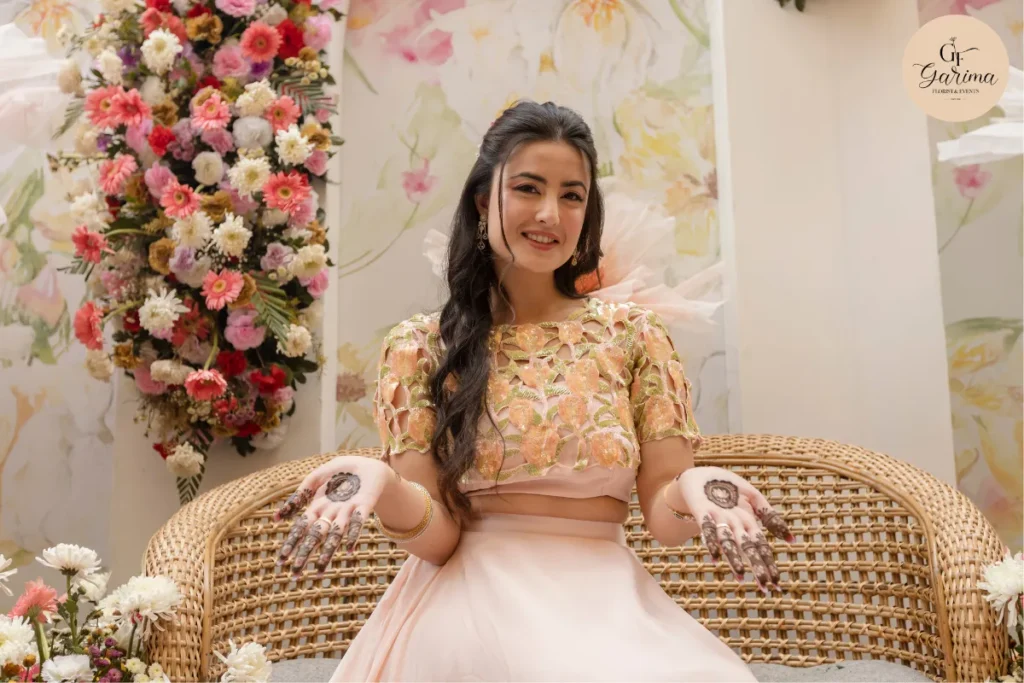
Mehendi should fit into the wider wedding schedule. Therefore, think about timing, artists, guests, setup, decor, photography and food service together. For example, artists need time to arrive and prepare, while guests need time to settle in. Meanwhile, the decoration team needs access before everyone else.
Good coordination keeps the day smooth. If you want help with the bigger picture, start with planning your wedding functions. Our wedding planning page also explains how we manage schedules and coordination.
If you are planning both celebrations, explore our Haldi decoration ideas for Nepali weddings and adapt each setup to the activities taking place.
Final Thoughts
A good Mehendi setup is not only colorful. It should feel comfortable, work well for artists, and let guests move easily. It should also look consistent and suit the venue.
Start with seating and layout. Then add the backdrop, flowers and lighting. This order keeps the space practical and the photos clean. To see how we handle real setups, browse our wedding and event work.
Frequently Asked Questions
What are some simple Mehendi decoration ideas at home?
Use a fabric or marigold backdrop, a compact sofa or bench, and floor cushions. Keep one combined Mehendi and photo area, and leave a clear walkway.
What seating works best for a Mehendi function?
Offer supportive sofas, benches or chairs, with floor cushions as an optional choice. Choose seating according to comfort and mobility, and check that the person receiving Mehendi and the artist can both sit comfortably.
Which flowers are commonly used for Mehendi decoration?
Marigolds are very common. Roses, carnations and mixed flowers with greenery also work well. Fresh or artificial flowers can suit different spaces and seasons.
How much space should be left for Mehendi artists?
Leave enough room for the artist to sit close to the client, reach supplies and move without bumping into others. Also keep a clear walkway behind them.
What should I consider for an outdoor Mehendi setup?
Check shade, wind, rain, ground stability and lighting. In addition, keep a covered backup area, and make seating comfortable for long sitting.
Do I need a separate photo backdrop for Mehendi?
Not always. In a small space, use the main backdrop for photos before application or during planned breaks. Keep photo queues away from artists while they work. A separate photo area can help where space allows.