
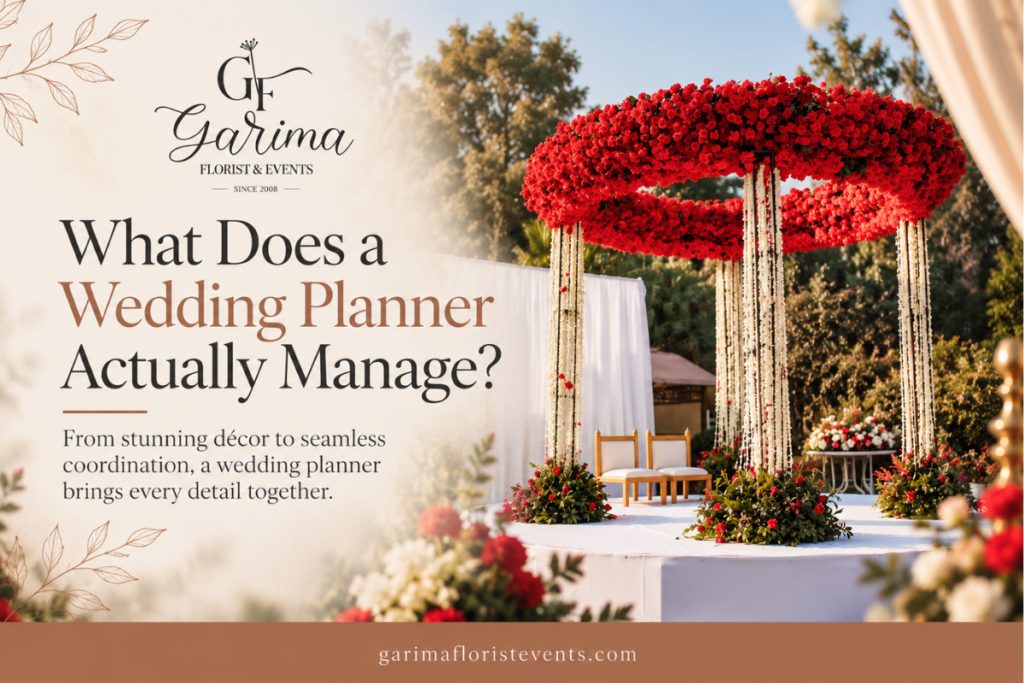
A wedding planner manages the many moving parts of a wedding so the couple doesn’t have to handle everything alone. This includes the venue, budget, vendors, timeline, ceremony, guests, and the logistics of the wedding day itself.
It is easy to think of a wedding planner mainly in terms of decoration, including floral decor, but wedding decoration is only one part of the wider planning process.
Planning a wedding means making decisions that all depend on each other. The venue affects the timeline. The timeline affects the vendors. The vendors affect the guest experience. A wedding planner’s real job is to connect these pieces so the event runs smoothly from start to finish.
The exact responsibilities depend on the service you choose. Some couples want support throughout the planning process, while others only need help during the final stages or on the wedding day. This article explains what a wedding planner actually does, what they manage behind the scenes, and how to decide if hiring one makes sense for your wedding.
Quick Summary
A wedding planner manages the planning, coordination, and execution of a wedding. Depending on the service, this can include:
- Venue: selection, setup, access, and venue coordination
- Budget: organizing expenses and aligning decisions with priorities
- Vendors: coordinating decorators, caterers, photographers, videographers, and other suppliers
- Timeline: scheduling setup, ceremony, photography, entertainment, and reception
- Ceremony: coordinating timing, sequence, participants, and setup
- Guests: supporting guest flow and hospitality arrangements
- Entertainment: coordinating schedules, setup, and transitions
- Wedding day: overseeing vendors, setup, timing, communication, and event execution
Wedding Planner Responsibilities at a Glance
| Wedding Planning Area | What a Wedding Planner Manages |
| Venue | Venue selection, setup requirements, access, and coordination |
| Budget | Expense organization, priorities, and budget-related decisions |
| Vendors | Communication, scheduling, requirements, and coordination between vendors |
| Timeline | Vendor arrivals, setup, ceremony, photography, entertainment, and reception timing |
| Ceremony | Sequence, timing, participants, setup, and coordination |
| Guests | Guest flow, seating logistics, hospitality considerations, and relevant communication |
| Photography & Videography | Scheduling, access, setup requirements, and coordination with the timeline |
| Entertainment | Scheduling, setup requirements, transitions, and coordination |
| Wedding Day | Setup oversight, vendor coordination, timeline management, communication, and event execution |
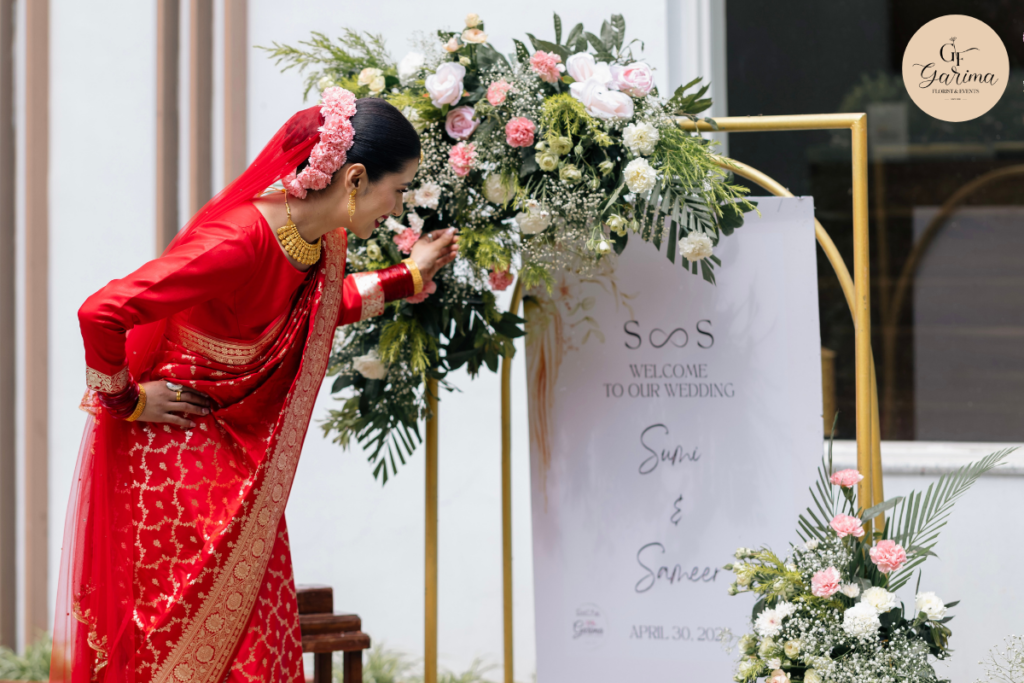
What Does a Wedding Planner Manage?
This is the heart of the job. A wedding planner does not manage one single thing. They manage several connected areas at the same time, and each one affects the others.
Venue Selection and Setup
Choosing a venue is not just about picking a pretty location. A planner looks at practical details too, such as how many guests the space can hold, when it is available, and how the venue layout and available spaces work with the rest of the day’s schedule.
Once a venue is chosen, there’s still work to do. Someone needs to plan how the space will be set up, when different teams can access it, and how decoration, seating, and equipment fit together without delays. A planner usually manages this so the venue is ready on time and works well with everything else happening that day.
Budget Planning and Expense Organization
Every wedding involves financial decisions, and most couples work within a budget. A planner helps a couple understand where their money is going and which parts of the wedding matter most to them, which might mean spending more in one area, like the venue or catering, and less in another.
Instead of listing exact costs, a planner’s real job here is organization: tracking what’s been agreed, what still needs deciding, and how different choices affect the overall plan. This keeps spending decisions aligned with what the couple actually wants, rather than made in isolation.
Vendor Coordination
A wedding involves many different vendors: the venue team, decorators, caterers, photographers, videographers, entertainment providers, and other suppliers, each with their own schedule and way of working.
A wedding planner doesn’t usually provide these services personally. Instead, they act as the point of contact between the couple and each vendor, confirming details, sharing timelines, and making sure everyone knows how their work fits together. If a caterer needs extra setup time, or a photographer needs access before the ceremony starts, the planner makes sure that happens without conflict.
Timeline and Scheduling
A wedding day usually involves many events happening back to back: vendor arrivals, setup, the ceremony, photography, entertainment, the reception, and the transitions between all of these. Each piece has its own timing, and if one runs late, it affects everything that comes after it.
A wedding planner’s job is to combine these separate schedules into one timeline that works, understanding how long setup takes, when the ceremony should start, and how much time to leave for guests to move between locations. A well-built timeline is an important planning tool because it keeps vendors, activities and transitions organized.
Ceremony and Ritual Planning
On the organizational side, a planner manages the ceremony sequence, timing, and who needs to be where and when, coordinating with the people involved and keeping the ceremony aligned with the rest of the day’s schedule. A planner may also help organize different wedding functions as part of the overall ceremony and event schedule.
Every family has their own traditions and preferences for how a ceremony should be structured. A planner’s role is not to decide what those traditions are, but to make sure the ceremony runs smoothly once the family has decided what they want.
Guest and Hospitality Management
Guests are a big part of any wedding, and keeping them comfortable and informed matters. A planner often manages guest-related coordination, such as seating logistics, event flow, and communication about timing or location changes.
This doesn’t always include services like RSVP tracking, hotel bookings, or transportation. This depends on couple’s agreement. The focus is usually on making the guest experience feel organized from arrival to the end of the event.
Photography and Videography Coordination
Photographers and videographers need to be in the right place at the right time to capture key moments. A planner helps schedule when and where this should happen, and makes sure these teams have the access and setup time they need, fitting it all into the overall timeline without delaying anything else that day.
Entertainment Planning
Whether it’s music, performances, or other entertainment, this part of the wedding needs its own schedule too. A planner manages when entertainment starts and ends, what setup it requires, and how it transitions with other parts of the event, such as moving from the ceremony to the reception.
If entertainment starts too early or too late, it can throw off the rest of the evening, so a planner keeps this in sync with everything else.
What Does a Wedding Planner Manage Behind the Scenes?
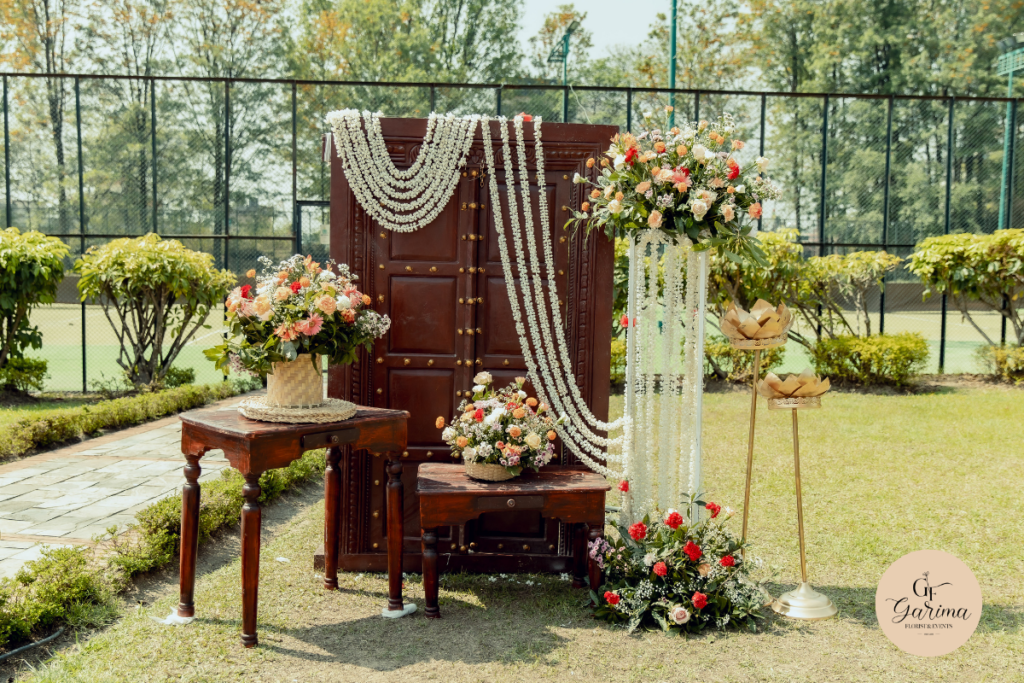
Here is what a lot of people miss: a wedding planner’s real value is not just completing individual tasks. It’s managing how those tasks connect to each other.
Think about a simple sequence: venue setup, then vendor arrival, then decor completion, then photography, then the ceremony, then entertainment, then the reception. Each step depends on the one before it finishing on time. If decor runs late, photography gets delayed. If photography runs long, the ceremony start time is affected.
A wedding planner helps manage these connections: checking that one part is ready before the next begins, communicating changes between vendors, and solving small problems before they become bigger ones.
So when someone asks what they’re actually getting from a wedding planner, the honest answer is this: someone who manages the connections between everything else. Without that coordination, even well-chosen vendors and a beautiful venue can end up working against each other instead of together.
Wedding Planner vs Planning Your Wedding Yourself
Not every couple needs a wedding planner. It’s worth weighing both options before deciding.
Planning Your Wedding Yourself
Handling the planning yourself can work well if you have enough time, enjoy comparing vendors and venues, and your wedding doesn’t involve too many moving parts. It also helps to have family or friends willing to assist.
Working With a Wedding Planner
Hiring a planner can be useful if you want one point of contact instead of managing many vendors separately. A planner can also help build and manage the timeline, keep decisions organized, coordinate logistics, and provide support on the wedding day itself, depending on the service you choose.
Which Option Makes Sense?
| Planning Yourself | Working With a Wedding Planner |
| Couple manages the planning | Planner manages the agreed planning areas |
| Couple communicates with vendors | Planner coordinates with vendors |
| Couple builds the schedule | Planner helps build and manage the timeline |
| Couple handles logistics | Planner coordinates logistics within the agreed scope |
| Family or friends may help on the day | Professional event-day support may be available |
There’s no single right answer. It depends on how much time you have, how complex your wedding is, how much support you already have, and how much professional coordination you want.
What Does a Wedding Planner Do Before and on the Wedding Day?
A wedding planner’s role changes as the wedding gets closer. Before the wedding, the focus is mainly on planning and preparation. However, once the wedding day arrives, that focus shifts to execution and handling things as they happen.
Before the Wedding
Before the wedding, a planner works with the couple to turn their ideas and requirements into a practical plan. This is where the important decisions are organized, schedules are prepared, and the different people involved in the wedding are brought together around the agreed plan.
There can be a lot to keep track of, and small details can easily be overlooked when everything is being handled at once. A planner helps bring those details together before the wedding so there is a clear plan to follow when the day arrives.
On the Wedding Day
On the wedding day, the planner’s role becomes more hands-on. The plan is no longer just something on paper; it has to work in real time.
The planner oversees the agreed arrangements, keeps the day’s activities moving, coordinates with the teams involved, and helps deal with changes when they come up. However, the goal is not simply to make sure everything happens exactly as planned. Weddings can change from one moment to the next, so having someone who can respond and keep things moving can make the day easier for the couple and their family.
In simple terms, a wedding planner prepares and organizes before the wedding, then helps put that plan into action on the wedding day.
How Does a Wedding Planner Turn Plans Into an Actual Event?
Every wedding planner has their own process for moving from an initial idea to a finished event. At Garima Florist & Events, this happens across four stages.
1. Initial Consultation
Garima begins by understanding the couple’s vision, requirements, priorities, budget, wedding date, and venue considerations.
2. Planning & Design Brief
The information gathered during the consultation is organized into a planning and design brief, giving the wedding a clear direction.
3. Coordination & Preparation
The agreed planning direction is taken into the preparation stage, where the different elements of the wedding are organized according to the couple’s requirements and the agreed plan.
4. Wedding Day Execution
The prepared plan is put into action through on-site coordination and execution, helping the planned arrangements come together on the wedding day.
You can also explore Garima’s wedding and event work to see examples of how planning and execution come together in practice.
Is a Wedding Planner the Same as a Wedding Coordinator or Decorator?
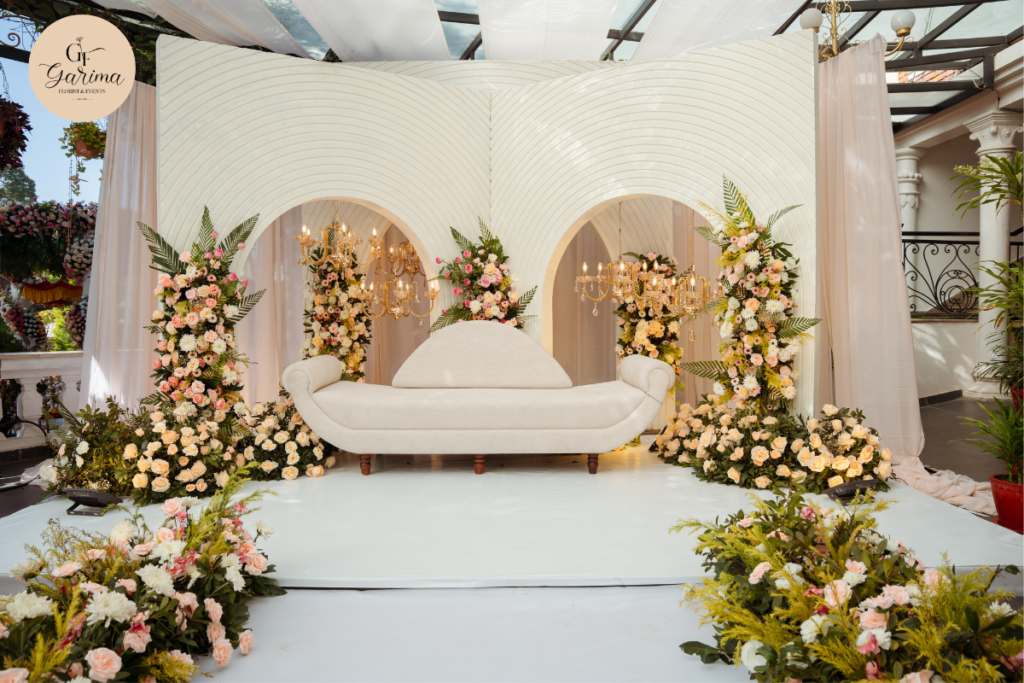
These three roles are often confused, but they usually focus on different things:
| Role | Primary Focus |
| Wedding Planner | Overall planning and coordination |
| Wedding Coordinator | Event logistics and execution |
| Wedding Decorator | Décor, styling, and visual setup |
In practice, these roles can overlap, and some companies offer more than one together. A wedding planner is usually involved earlier and manages a broader range of decisions, while a coordinator tends to focus on logistics closer to or during the event. A decorator focuses specifically on how the space looks, including floral, styling, and visual setup.
Garima Florist & Events combines wedding planning, event management, and decoration, so these areas are handled together rather than as separate services.
What Is Included in Full Wedding Planning?
Full wedding planning usually means having support across most of the wedding planning journey, rather than hiring help for only one specific task or stage.
Depending on the planner and the agreed scope, this may include:
- Understanding the couple’s requirements and overall wedding vision
- Planning and organizing the major wedding arrangements
- Coordinating the different vendors and people involved
- Keeping the planning schedule and key decisions organized
- Supporting ceremony, guest, entertainment, and event-related arrangements
- Providing coordination and support as the wedding moves toward the day itself
- Helping oversee the planned arrangements during the wedding
However, “full wedding planning” does not necessarily mean the exact same thing with every planner. The services included, level of involvement, and responsibilities should be clearly discussed before the planning begins.
For couples considering broader support, Garima Florist & Events offers full wedding planning alongside its event management and decoration services. You can explore Garima Florist & Events’ full wedding planning service to see what this level of support involves.
What Should You Look for in a Wedding Planner in Nepal?
Choosing a wedding planner is not only about how the final decoration looks. You also need to understand how the planner works and what kind of support you will receive throughout the wedding.
When comparing wedding planners in Nepal, consider:
- Clear services and scope: Make sure you know what the planner will handle and what remains your responsibility.
- A clear planning process: Ask how the planner moves from the first consultation to the wedding day. This helps you understand what to expect at each stage.
- Vendor coordination: Find out whether the planner will coordinate with the vendors involved in your wedding or whether you will need to manage those conversations yourself.
- Wedding-day support: Ask what happens on the actual wedding day and who will be available to manage the planned arrangements.
- Communication: Understand how you will communicate during the planning period and how updates or changes will be handled.
- Understanding of your requirements: A good fit should start with listening. Your planner should understand your priorities, budget, venue, and the type of celebration you want rather than simply applying the same plan to every couple.
For couples planning a wedding in Kathmandu or elsewhere in Nepal, the most important thing is to choose a planner whose services, process, and level of involvement match what you actually need. Before making a decision, ask questions about the scope of work and make sure expectations are clear from the beginning.
If you are looking for a team that provides planning, coordination, and event support, you can explore Garima Florist & Events’ wedding services to see how their approach fits your requirements.
How Garima Florist & Events Helps Plan and Manage Weddings
Established in 2008, Garima Florist & Events provides wedding planning, event management, and decoration services in Kathmandu, Nepal. You can also learn more about Garima Florist & Events and its approach to event planning. Its approach starts with understanding what the couple actually wants for their celebration. From there, the team helps organize and manage the different areas that need to come together for the wedding.
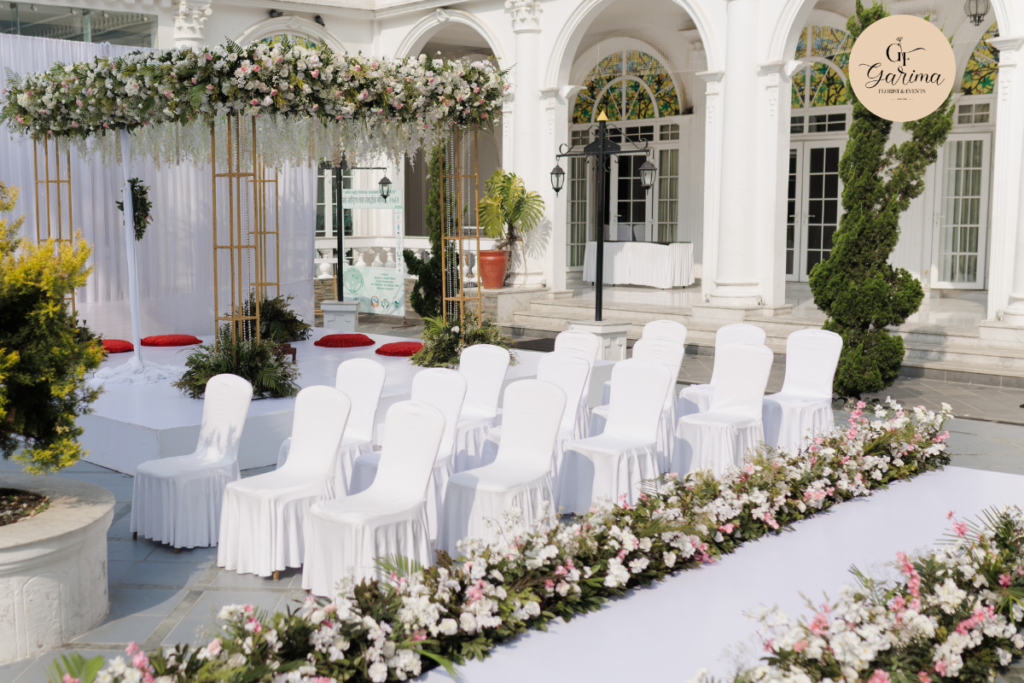
Depending on the couple’s requirements, this can include the following:
- Venue Selection & Setup: Garima considers the selected venue and helps plan how the available space can be prepared for the wedding.
- Budget Planning: The team considers the couple’s priorities when organizing planning and design decisions.
- Vendor Coordination: Garima helps keep communication and arrangements organized between the couple and the vendors involved.
- Timeline & Scheduling: The team helps structure the wedding activities so each part has its place in the overall schedule.
- Ritual & Ceremony Planning: The planners organize ceremony-related arrangements around the couple’s requirements and the planned sequence.
- Guest & Hospitality Management: Garima considers guest-related arrangements as part of the overall wedding experience.
- Photography and videography coordinators consider the requirements alongside the wedding schedule and other planned arrangements.
- Entertainment Planning: Garima considers entertainment requirements as part of the overall flow of the celebration.
These areas are not handled in isolation. For example, a change in the venue can affect the setup, schedule, guest arrangements, or other parts of the event. Garima’s approach is to consider these connected elements together so the wedding plan remains organized from preparation through execution.
Useful Resource
Planning a destination wedding in Nepal? Explore the Nepal Tourism Board’s destination wedding guide for additional information about Nepal as a wedding destination.
Frequently Asked Questions
Is a wedding planner worth hiring?
Whether a planner is worthwhile depends on the couple’s available time, wedding complexity, planning preferences, and the amount of support they already have. A planner can be particularly useful when several vendors, schedules, and logistical details need to be coordinated.
When should you hire a wedding planner?
The right timing depends on how much planning support you want. Couples seeking help throughout the planning process generally involve a planner earlier, while those who only need coordination may bring one in closer to the wedding.
Can a wedding planner work with vendors I choose?
Yes, a wedding planner may coordinate with vendors you have already selected, depending on the service scope and agreement. It is worth discussing your existing vendors during the initial consultation so everyone understands how coordination will work.
Can a wedding planner help with only part of the wedding?
Yes, depending on the planner’s service options. Some couples may seek support for specific planning stages or wedding-day coordination rather than full wedding planning.
Conclusion
A wedding planner manages the details that keep a wedding organized, from venue selection, budgeting, and vendor coordination to timelines, ceremony planning, guest arrangements, and wedding-day execution. The right planning support can reduce the pressure on couples and help different parts of the celebration work together smoothly.
If you are planning a wedding in Nepal and need professional wedding planning and event management, Garima Florist & Events can help. Get in touch to discuss your requirements.
Phone: +977 9851345602
Email: garimaflorist@gmail.com
Location: Budhanilkantha, Nepal
Planning a wedding involves many connected decisions, from the venue and vendors to the timeline and event-day execution. If you want to understand what type of planning support would suit your celebration, you can book a consultation with Garima Florist & Events.